

01
Off-the-shelf software
One mold for thousands of different companies
Custom software
Custom software development services for the way your company works
We build the application your company runs on when off-the-shelf software stops fitting: one that follows your process, your rules and your data. We scope it with you, we build it in phases, and the source code is yours.
- You talk to the engineers who write the code
- Price and scope in writing before each phase
- Source code, documentation and access handed over at launch
- We reply within one to two business days
PHPLaravelSymfonyNode.jsJavaScriptVue.jsHTML5CSS3BootstrapMySQLMongoDBRedisAWSGit
What custom software development is
Custom software development means designing and building an application around one company’s process. Instead of buying a finished product, you commission a tool that works the way your business works.
The difference with off-the-shelf starts at the drawing board. An ERP or a generic platform is designed for thousands of companies at once, so it handles the common parts well and forces the rest. Custom software is drawn around one company, with its rules, its data and the systems it already runs.
So the question is not which kind is better. It is how much your process looks like everyone else’s. Where it is common, a standard product usually wins. Where it is yours and part of why customers pick you, building is the option that fits.
What we build
The software we build for companies
Every project is different, and almost all of them land in one of these six families.
Internal operations tools
Software that puts your team’s day in order. Production, inventory, work orders, dashboards, or any process that lives in a spreadsheet today. The shared file becomes a tool with reliable data, a full history and access by role.
Web platforms and customer portals
Web applications your team and your customers reach from anywhere. Order portals, private accounts, document managers, or a platform that connects you with your suppliers and distributors.
Mobile apps
When your crew works in the field, on the plant floor or on a route, the tool has to fit in a pocket. We build apps wired to your central systems, so data is captured where it happens. More on mobile app development.
System integrations
Your ERP, your site, your online store and your back office have to talk to each other. We connect systems so the data moves on its own and nobody types the same order twice. The detail is on systems integration.
Process automation
We find the repetitive work that eats your team’s hours and turn it into automatic steps. Invoicing, reporting, alerts, data syncs. Inside the software itself, or on its own as a process automation project.
Legacy application modernization
When you already have a program that works and has aged, there is usually plenty worth keeping. We work out what to keep, what to rewrite, and how to migrate in pieces while your operation keeps running.
When it fits
When custom software pays off
Building your own is a serious investment. These signals tell you whether it is your case.
05 signalsIt pays off when:
- Your process is different from your competitors’ and that difference is why you win work.
- You pay for several tools that do not talk to each other, and the glue holding them together is a person copying data.
- Per-seat license costs are climbing faster than your headcount.
- You have tried two or three standard products and your team ends up working outside the system in every one.
- You need the software to talk to machines, customers or systems that come with requirements of their own.
04 casesAnother option suits you better if:
- The problem is a common one and a standard tool already solves it well at a sensible price.
- The process still changes every month. Stabilize it first, automate it after.
- The budget covers a start but not a first useful block. A complete standard tool beats a half-built one.
- You need something running this week. Real development ships in phases, and the first one takes weeks.
If you are in the second group, we will say so on the first call.
What you gain
What a build of your own changes day to day
Scoped properly, software you own changes how the work gets done every morning. These are the points that carry the most weight when companies decide.
- Hours back. The repetitive part stops being somebody’s afternoon, and that time goes to work only a person can do.
- One version of each number. No more reconciling three spreadsheets to find out which one is right.
- Headcount stops driving the bill. Adding users to software you own does not add a line to a renewal.
- It grows in phases. The application widens at the pace of the business, on the same foundation, instead of being replaced every few years.
- It fits what you already run. The new piece connects to your ERP, your site and your current systems rather than forcing them out.
- It becomes an asset. The code is built for your operation and it stays yours, which is a different thing from a license you re-rent every January.
- Security sized to your actual risk. Requirements get set for your case, and if you want the current picture first, start with a security audit.

Before any code
We only build the part that is genuinely yours
Whatever an existing tool already handles, we use. Whatever only happens at your company, we build. Separating the two keeps the project, and the budget, to a sensible size.
Method
How we work, step by step
The method is built so you always know what is happening, what you receive, and what the next step costs.
- Analysis and scope.
We go through your process, your systems and your goal, and we check that custom development is the option that fits. You get a scope document with the problem defined and a fixed price for the first phase. When the case calls for it, technology consulting goes wider.
- Functional design and prototype.
We turn the scope into clickable screens before anyone writes code. Your team walks through that prototype and signs off on it, which is where you fix cheaply what gets expensive to fix in code.
- Development in phases.
We build in short blocks with a demo at the end of each one. Working versions land in your hands from the first weeks instead of one reveal at the end.
- Testing and sign-off.
We test with real data and with the people who will use the software every day. Before launch you have a test environment and a written fix list.
- Launch and training.
We deploy the application, migrate the data and train your team. You get the software running, the documentation and the source code.
- Support and evolution.
Software keeps living. The maintenance plan and a roadmap of improvements come with it, in the order you decide.
How you engage us
Two ways to contract the work
Turnkey project
We take the whole thing, from analysis to launch, with a fixed price per phase. This is the usual model when you have no technical team of your own, or you would rather hand the project over.
Embedded team
We put senior engineers inside your team, with your tools and your process. This is the model for companies with a technical department that need more capacity without opening a role. Full detail on team augmentation.
Ownership and handover
What you own, and what gets handed over
The software we write for your project is yours, and it says so in the scope document before the first phase starts. At launch you get the repository, the documentation, the deployment and the credentials, so your team or any team you hire later can pick it up without starting over.
Maintenance comes with a defined scope and cost, and covers fixes, security updates and small improvements. Larger improvements are quoted as new phases whenever you ask for them. If you would rather hand over the infrastructure the application runs on, that is our managed services work.
Stack
The technologies we work with
We pick the technology after we understand the problem, favoring tools with a large community and a deep pool of engineers. Your software stays on familiar ground for whoever touches it in five years.
- Backend:PHP with Laravel or Symfony, and Node.js
- Frontend:JavaScript, Vue.js, HTML5, CSS3 and Bootstrap
- Databases:MySQL, MongoDB and Redis
- Infrastructure:AWS
- Version control:Git
- Integrations:REST APIs and webhooks
Who the builds are for
Industries we work in
Most of our builds are for companies that move physical things or run an operation with a lot of moving parts. We write software for manufacturers, logistics and warehouse operators, construction firms, automotive businesses, online retailers and SaaS companies, and for multi-location and hospitality groups that need every site working off the same numbers. Open any of them and you get the processes, and the bottlenecks, that come up in that business.
Common cases
What a project usually starts out as
Three situations that bring a company to a custom build in the first place.
01Situation
A manufacturer runs orders through three systems that do not talk to each other, and somebody spends every Friday reconciling them.
What we build
One platform holding orders, production and invoicing, with the same record visible to everyone who touches it.
02Situation
A field service company still fills out work orders on paper, and the office types them in again a day later.
What we build
A mobile app for the crews wired to the office, so the job is logged once and invoicing stops waiting on data entry.
03Situation
A distributor has an online store that knows nothing about the ERP, so stock and pricing drift apart until a customer notices.
What we build
An integration that keeps stock, pricing and orders in step, with one system named as the source of truth.
Case studies
Builds you can read in full
Three of them, each with the scope and how it was settled.

Raw Living Spirulina (Software)
The commerce stack behind a Florida subscription business: deliveries, shipping zones, support routing and accounting kept working as one system.
See the project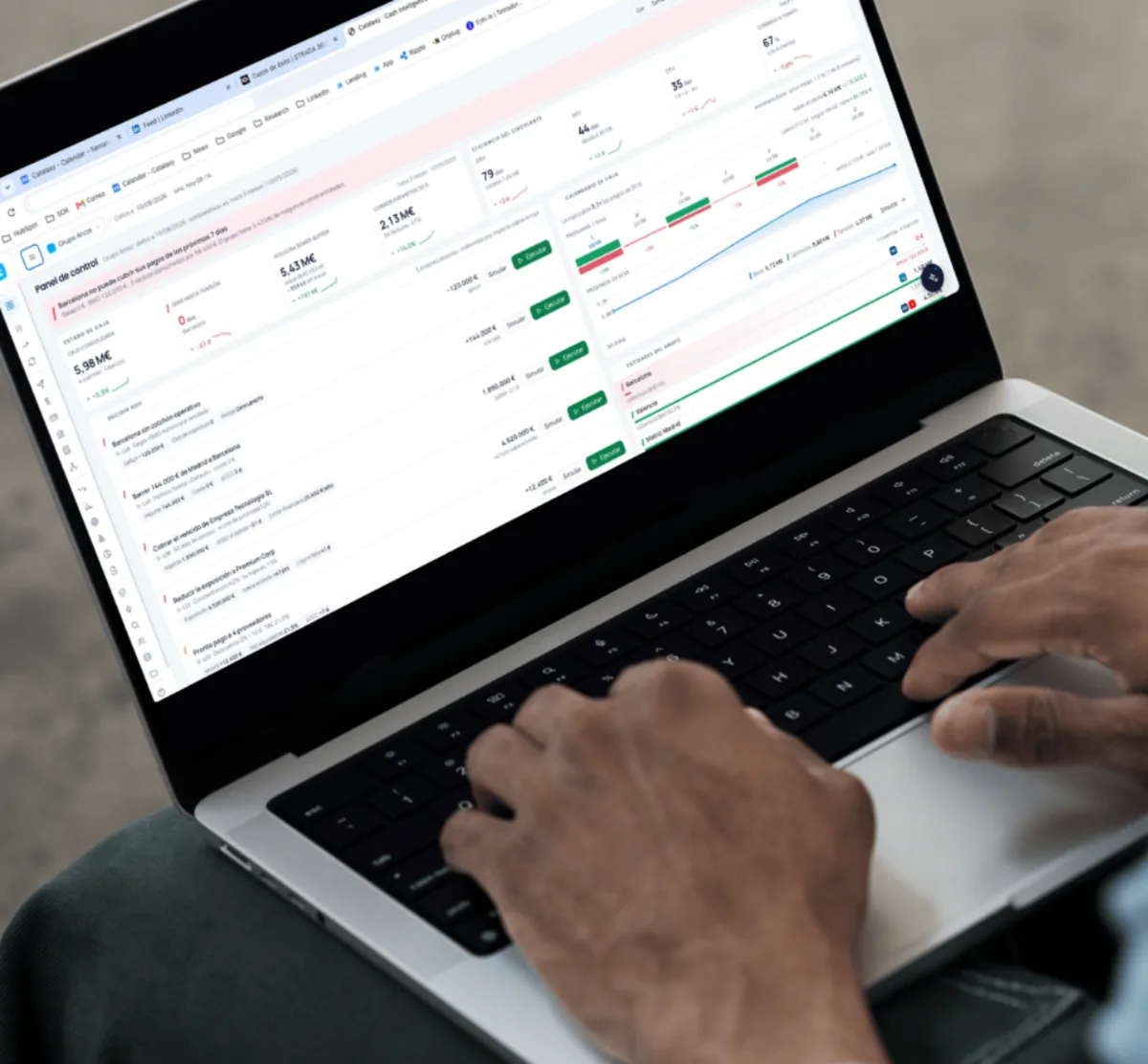
Catalaxy (Software)
Close to twenty modules in one cockpit: forecasting, reconciliation, collections and reporting, with the twentieth screen as readable as the first.
See the project
Atelier CRM (Software)
An ordering CRM that arrived with a list of faults and screens that asked too much of the staff using them. We fixed both.
See the project
Investment
What decides the price of a custom build
Every project is quoted on its own. These are the six things that move the number.
- How many processes and screens the application has to cover
- Integrations with the systems you already run, and how cooperative they are
- Users, roles and permissions
- Migrating data out of the tools you use today
- Security and compliance requirements
- How much support you want afterward
After the first call you get a written proposal: the scope phase by phase, what each phase includes and what it costs, so there is nothing to work out from a range on a web page.
Why us
Why build your software with STRADA 360º
The people writing your code are in the calls, from the scope document through launch.
The software arrives documented and in order, so another team can carry it later without starting from scratch.
Each phase has its price and its scope in writing before it starts.
When a standard product solves your problem for less money, we will point you at it and say why.
A standing call in your time zone, and engineers online through your morning for questions, demos and reviews.
A single agreement with a single company, your NDA signed before anyone gets access, and any personal data in your systems handled to the standard your state privacy law sets, and to GDPR where European data is involved.
Questions we get about custom software development
Let’s talk about your projectIt depends on the scope, so the real answer arrives with the scope document. What we can tell you up front is the shape: the work splits into phases, each phase carries its own dates, and parts of it are running well before the end. The full calendar is in writing before the first phase starts.
A standard ERP ships with features built for common processes, and your company adapts to them. Custom software is built on the process you actually run. Off-the-shelf wins on how fast you can start. Building wins on fit, on integrations, and on what each new user costs you over the years.
You do. The code and documentation we create for your project belong to you, and it is written into the scope document before the first phase starts, so it never comes down to interpretation later. At launch you receive the repository, the documentation and the credentials. Where a project uses open source libraries or a third-party service, their own licenses keep applying, and the scope document names them so you know exactly what you are holding.
Yes, and that work sits in the analysis from day one rather than arriving as a change order. We connect the new software to your ERP, your site, your online store or your back office so the data moves without manual work. More on how we do it on our systems integration page.
We work on a fixed price per phase. Before anyone writes a line of code you get a scope document with the price and the contents of the first phase, and every phase after that is quoted the same way. What moves the number: how many processes and screens the application covers, how deep the integrations go, users and permissions, data migration out of your current tools, your security and compliance requirements, and the level of support afterward.
A defined one: fixes, security updates and small improvements, agreed at the close of the project with a scope and a cost you can plan around. From there the software moves at the pace you set, and bigger improvements are quoted as new phases when you want them.
Then that is the best news your budget will get this quarter. Separating what the market already solves from what has to be built is the first job on every project we take. If a standard product covers your case, we say so on the first call.
On your hours and in your tools. A standing call in your time zone, engineers online through your morning, and a demo at the end of each phase. We work in the tracker and the chat tool your team already uses, and decisions get written down where your people can find them. You sign one contract with one company, under European law, and we work under your NDA and your own security requirements.
Enough to explain your process and what you want solved, in your own words. The technical documentation is our job. Write to us and we reply within one to two business days to set up a first call, and if it fits we put together the proposal with the scope of the first phase.
Next step
Which of your processes needs software of its own?
Tell us how you run it today and with which tools. We reply within one to two business days to set up a first call, and from there we map the route for your project.
Let’s talk about your project